
Guides
Spotting water damage before it spreads
The early signs most homeowners miss — and what to do the moment you see them.
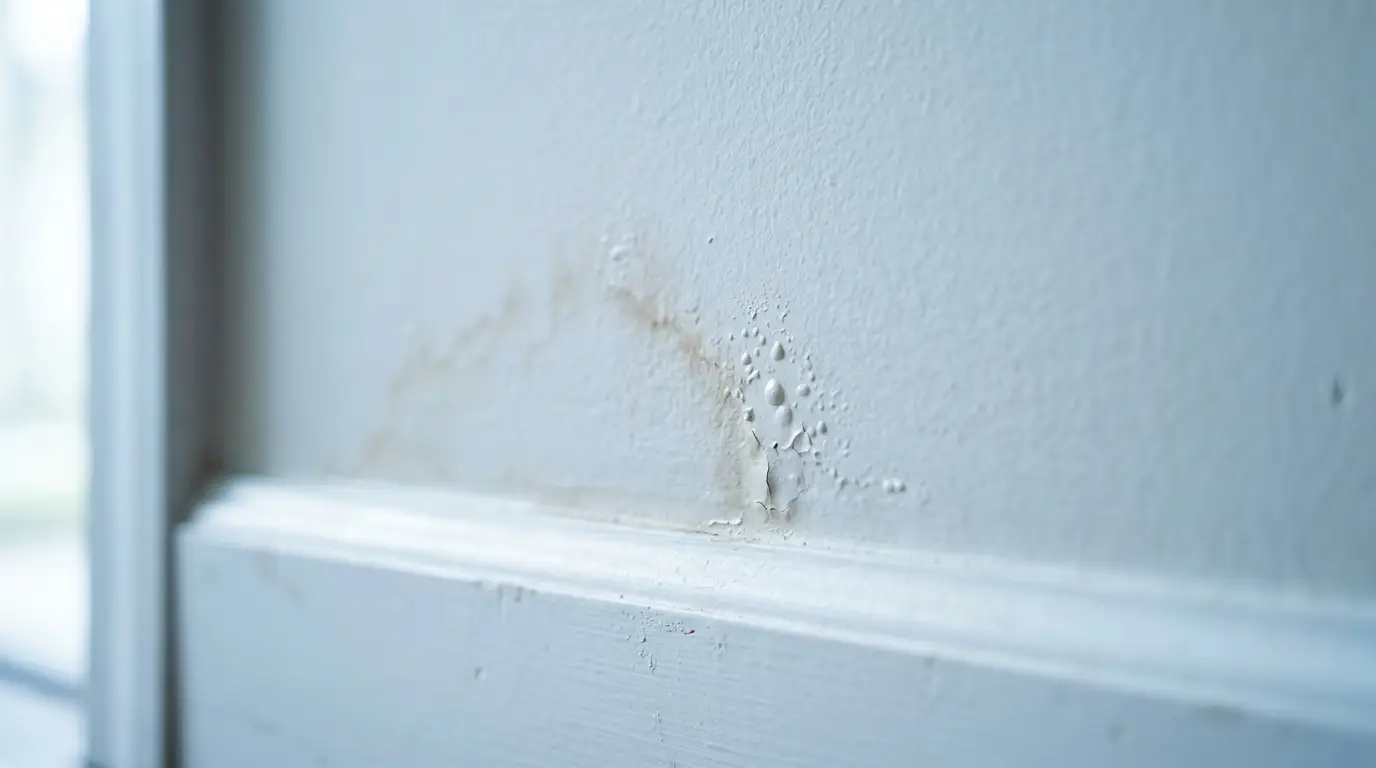
Water damage almost never announces itself with a dramatic flood. Most of the time it starts quietly, weeks or months before you notice anything, which is exactly why so many homeowners miss it. The way to spot it early is to train your eyes and nose on the small stuff: faint stains that slowly grow, paint that bubbles or wrinkles, floors and trim that warp or feel soft underfoot, a musty smell that lingers even after you clean, and a water bill that creeps up for no clear reason. Then you check the places leaks love to hide, mostly under sinks, behind and beneath appliances, along ceilings, in the basement, and around windows and the roofline. The moment you see a real sign, you do three things: stop the water if you can, dry the area fast, and figure out whether it is a quick fix or a job for a local pro. Catch it in this early window and you are usually dealing with a small, affordable repair instead of a gutted room.
Key takeaways
- The earliest signs are subtle: creeping stains, bubbling or wrinkled paint, warped floors, soft spots, a musty smell, and an unexplained jump in your water bill.
- Leaks hide in predictable spots, so a five-minute check under sinks, behind appliances, and along ceilings catches most problems early.
- Acting within the first day or two usually keeps a small repair from turning into structural damage and mold.
- Trust your nose. A musty smell often means moisture is lurking somewhere you cannot see yet.
- Simple DIY checks go a long way, but clean water spreading fast, sewage, or any hidden-source leak is a job for a local pro.
Why early beats late (and cheaper beats expensive)
Water is patient and persistent. A slow drip under a cabinet can go unnoticed for months while it soaks into the wood, the subfloor, and the drywall around it. In the first day or two, that is often a matter of tightening a fitting and drying things out. Give it a few weeks and the same leak can swell your flooring, crumble drywall, and create the damp, dark conditions that mold needs to take hold.
The cost curve is steep. Early on you are usually looking at a minor plumbing fix and some drying. Let it linger and you start adding replaced materials, mold remediation, and sometimes structural repair. The damage also spreads outward, so a problem that started under one sink can end up affecting the wall, the floor, and the room next door.
There is a health angle too. Lingering moisture is what allows mold to grow, and mold can bother people with allergies, asthma, or sensitive lungs. This is general information rather than medical advice, but the practical takeaway is simple: drying things out quickly protects both your house and the people in it.
The subtle signs most homeowners walk right past
You do not need special tools to catch water damage early. You need to know what you are looking at. Here are the quiet signals worth paying attention to.
Stains and discoloration. Yellow, brown, or coppery rings on a ceiling or wall are classic. A fresh stain has a defined edge; one that keeps growing means water is still coming. Even a faint shadow that was not there last month is worth a second look.
Bubbling, peeling, or wrinkled paint. When moisture gets behind paint or wallpaper, it loses its grip. Paint that bubbles, blisters, or looks slightly wrinkled is often hiding damp drywall underneath.
Warping, buckling, or cupping. Wood and laminate flooring react to moisture by swelling. If planks lift at the seams, cup at the edges, or feel uneven when you walk across them, water may be coming up from below or spreading from a nearby leak.
Soft or spongy spots. Press gently on a floor near a tub, toilet, or appliance, or on a wall under a window. If it gives a little or feels soft, the material behind it may be saturated.
A musty, damp smell. Your nose often beats your eyes. That earthy, closed-up basement smell usually means moisture is sitting somewhere, even if the surface looks dry. If a room smells musty after you have cleaned it, treat that as a clue, not a nuisance.
An unexplained higher water bill. If your usage jumps and nothing about your habits changed, a hidden leak is a strong suspect. A running toilet, a slab leak, or a dripping supply line can quietly add up.
Peeling caulk, rust, or condensation. Caulk pulling away around a tub or sink, rust on pipes or the base of a water heater, and constant condensation on a wall or window all point to moisture that should not be there.
Here is a quick way to read the most common signs.
| Sign | What it usually means | How urgent |
|---|---|---|
| Growing ceiling or wall stain | Active leak above, often roof or a pipe | High, water is still moving |
| Bubbling or peeling paint | Damp drywall behind the surface | Medium to high |
| Warped or cupping floor | Moisture under or beside the flooring | Medium to high |
| Soft or spongy spot | Material is already saturated | High |
| Musty smell, no visible source | Hidden moisture, possible mold starting | Medium, investigate soon |
| Water bill creeps up | Hidden supply-line or slab leak | Medium, find the source |
| Peeling caulk or surface rust | Ongoing minor moisture exposure | Low to medium, fix soon |
Room by room: where leaks actually hide
Water damage tends to show up in the same handful of places. Walk your home with this list and you will cover the usual suspects.
Under every sink. Open the cabinets under the kitchen and bathroom sinks and look at the supply lines, the shutoff valves, and the P-trap. Feel for dampness, look for water rings on the cabinet floor, and check for that telltale musty smell. Slow under-sink drips are one of the most common hidden leaks, and they often trace back to a worn connection you can learn more about in our guide to hidden pipe and appliance leaks.
Around appliances. Dishwashers, refrigerators with ice makers, washing machines, and water heaters all connect to water lines that can weep or fail. Pull the fridge out now and then, peek behind and beneath the dishwasher, check the washer hoses for bulges or cracks, and look for rust or pooling around the base of the water heater.
Ceilings and the floor above. A stain on the ceiling usually means water is coming from above, whether that is an upstairs bathroom, an HVAC line, or the roof. Note where the stain sits and whether it lines up with a bathroom, a pipe run, or an exterior wall.
Basements and crawl spaces. These are ground zero for moisture. Look for efflorescence (a white, chalky residue on concrete), damp corners, staining along the base of walls, and standing water after heavy weather. A persistent musty smell down here is common and worth chasing down.
Windows and doors. Water can sneak in around failing seals and worn caulk. Check the corners of window frames and the sills for staining, soft trim, peeling paint, and condensation trapped between panes.
The roofline and attic. Many ceiling leaks start at the roof. After a storm, water stains in the attic, damp or matted insulation, and daylight showing through are all red flags. Roof and weather-driven leaks are their own category, covered in our overview of storm and flood damage.
| Room or area | Where to check | What to look for |
|---|---|---|
| Kitchen and baths | Under sinks, supply lines, P-trap | Damp cabinet floor, rings, musty smell |
| Appliances | Behind fridge, dishwasher, washer, water heater | Hoses, rust, pooling, corrosion |
| Ceilings | Below upstairs baths and pipe runs | Growing stains, sagging, drips |
| Basement or crawl space | Walls, corners, floor | White residue, damp spots, standing water |
| Windows and doors | Frame corners, sills, caulk | Soft trim, staining, condensation |
| Attic and roof | Underside of roof, insulation | Stains, damp insulation, light gaps |
What to do the moment you spot a sign
Finding a sign is good news, because it means you caught it. Move through these steps calmly.
- Stop the water if you safely can. Shut off the nearest valve, or the main if you cannot pin down the source. This alone prevents a lot of damage.
- Move what you can and start drying. Get belongings out of the wet zone, mop up standing water, and set up fans and airflow. The faster you dry, the less spreads.
- Watch for electrical risk. If water is near outlets, wiring, or a fixture, keep your distance and cut power to that area at the breaker if it is safe to do so.
- Document it. Take clear photos and a few notes before you clean up. If you ever file an insurance claim, that record helps, and you can read more in our post on whether insurance covers water damage.
- Find the source, or get help finding it. A visible drip you can trace is one thing. Water with no obvious origin is a sign to call a professional before it spreads further.
DIY checks versus when to call a pro
Plenty of early detection is genuinely do-it-yourself. Once a month, do a quick walk-through: open the under-sink cabinets, glance behind the appliances you can reach, scan ceilings and window frames, and take a deliberate sniff in the basement. Tighten a loose fitting, re-caulk a gap, swap a cracked washer hose. These small habits catch a surprising share of problems.
Some situations, though, are worth handing to a local pro sooner rather than later:
- Clean water that is spreading fast or has soaked into walls, floors, or cabinets beyond a small patch.
- A source you cannot find. A rising water bill or a musty smell with no visible leak often means water is moving inside a wall, under a slab, or beneath the floor.
- A musty smell or visible growth that keeps coming back. Lingering moisture and mold need proper drying and, often, remediation. Our page on mold and lingering moisture explains what that involves.
- Any contaminated water, including a backed-up drain or sewage, which is a health hazard and should be handled with professional sewage cleanup rather than a mop and bucket.
- Damage touching structure or electrical, such as sagging ceilings, warped subfloor, or water near wiring.
A good rule of thumb: if the water is clean, the source is obvious, and the wet area is small and drying quickly, you can likely handle it. If any of those is not true, calling a professional early is almost always cheaper than waiting.
The bottom line
Water damage rewards the homeowner who pays attention. The earliest signs are quiet, so make a habit of looking for the growing stain, the bubbling paint, the soft spot, the musty smell, and the water bill that will not sit still. Check the usual hiding places under sinks, behind appliances, along ceilings, in the basement, and around windows and the roof. When you spot something, stop the water, dry it fast, and be honest about whether it is a quick fix or a bigger job.
When it is the bigger job, or you simply are not sure, reach out to a local pro. A quick assessment early on is a small price for the peace of mind, and it keeps a minor leak from becoming a major repair.
Frequently asked questions
- What is the very first sign of water damage most people miss?
- Usually a small, slow-growing stain or a faint musty smell with no obvious source. Both mean moisture is present before you can see any real damage. A stain with a growing edge points to an active leak, and a musty odor that lingers after cleaning often means water is sitting somewhere you cannot see, like inside a wall or under the floor.
- Can I tell if water damage is old or new?
- Often, yes. A fresh stain tends to have a defined edge and a darker center, while an older one may have rings, like a water mark, and feel dry to the touch. New damage frequently comes with active moisture, a damp smell, or a soft, spongy surface. If you are unsure whether water is still coming, mark the edge of the stain and check it again in a day or two.
- Does a higher water bill really mean a leak?
- It can be a strong clue. If your usage jumps and nothing about your household routine changed, a hidden leak is a common cause, such as a running toilet, a dripping supply line, or a leak under a slab. Check the easy suspects first, then, if the bill stays high with no visible source, it is worth having a professional look for a hidden leak.
- Is a musty smell always mold?
- Not always, but it almost always means lingering moisture, which is what mold needs to grow. Treat a persistent musty smell as a signal to find and dry the source quickly. If growth keeps returning after you clean, that points to moisture that has not been fully addressed. This is general information and not medical advice, so if anyone in the home has breathing concerns, talk with a doctor.
- When should I stop DIY and call a professional?
- Call a local pro when clean water is spreading fast or has soaked into walls and floors, when you cannot find the source, when a musty smell or mold keeps coming back, when there is any sewage or contaminated water, or when damage reaches structure or wiring. A quick early assessment is almost always cheaper than waiting for the problem to grow.
Keep reading
Related articles
What to Do in the First Hour After a Basement Flood
A step-by-step for the moments that decide how bad — and how expensive — a flood gets.
How Long Does Water Damage Restoration Take, Start to Finish?
A realistic timeline for extraction, drying, and repairs — and what makes a job run long.

Category 1, 2, or 3 Water: Why the Difference Changes Everything
What the three water categories mean for safety, cleanup, and what can be saved.