
Guides
What to Do in the First Hour After a Basement Flood
A step-by-step for the moments that decide how bad — and how expensive — a flood gets.
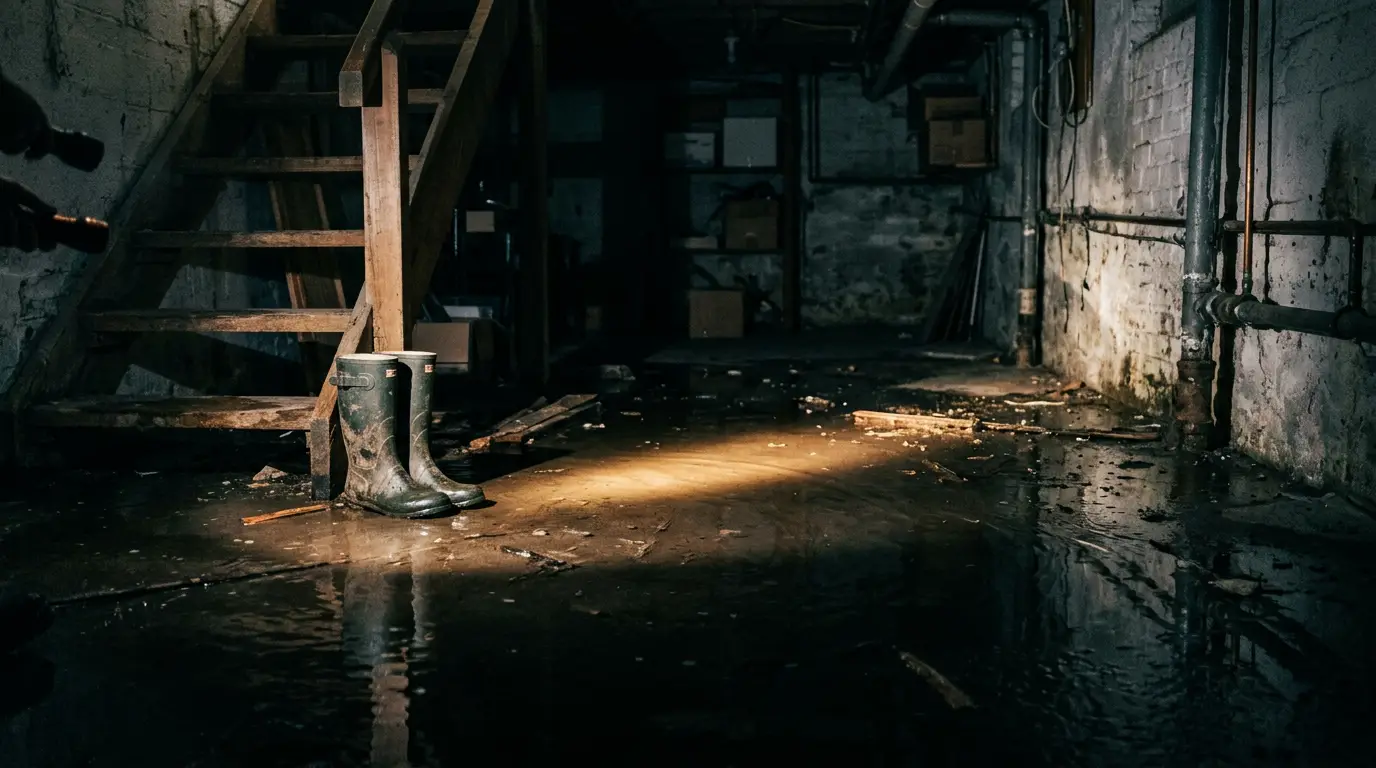
Take a breath. In the first hour after you find a flooded basement, your job is simple: keep people safe, stop more water from coming in, and start protecting what you can. Do not wade into standing water until you know the power to that area is off, because water and electricity together can be deadly. Once you have ruled out that danger, shut off the water source if you can reach it safely, get people and pets to dry ground, snap photos of everything before you move it, and call a professional if the water is more than an inch or two, if it is dirty, or if you are not sure what you are dealing with.
That is the whole plan in one breath. The rest of this guide walks through it in order, so you know what to do first, what can wait, and where the real hazards are hiding.
Key takeaways
- Safety comes before your stuff. Rule out electrical shock, gas, and structural danger before you step into any standing water.
- Stop the source if you safely can. A burst supply line usually means shutting the main water valve; a storm usually means waiting it out.
- Document everything with photos and video before you move or throw anything away.
- Water category matters. Clean water is a very different job from sewage or storm water, and the dirty stuff is a health risk.
- Fast action limits mold. Standing water and damp materials can start growing mold within a day or two.
- When in doubt, call a local pro. Deep water, contaminated water, or any sign of structural or electrical trouble is not a DIY job.
What is the very first thing I should do?
Stop at the top of the stairs and look before you go down. Your instinct is to rush in and start grabbing things, but the first hour is about not getting hurt.
Ask yourself three quick safety questions:
- Is there any chance the water is touching electrical outlets, cords, appliances, or the panel? If yes, do not step into the water. Water conducts electricity, and even a small amount around a live circuit can be fatal.
- Do you smell gas, or hear hissing? If yes, leave the house and call your gas utility and emergency services from outside. Do not flip switches or light anything.
- Does anything look structurally wrong such as bowing walls, a sagging ceiling, or floating debris pushing on the foundation? If yes, stay out and get a professional opinion.
If everything looks clear, you still want to cut the power to the basement before you go in, ideally from a dry spot. If your electrical panel is in the flooded area or you would have to stand in water to reach it, do not touch it. Call an electrician or your utility instead. Shutting off your own power is only worth doing when you can do it from dry ground with dry hands.
How do I stop the water from getting worse?
Once people are safe, the next question is where the water is coming from. Stopping the source can be the difference between a wet floor and a ruined basement.
Here is how the source usually points you toward the fix:
- A burst pipe, a failed water heater, or a supply line under a sink or washer. Shut off your home main water valve. It is usually where the water line enters the house, often near the front foundation wall or close to the meter. Turning it clockwise (righty tighty) shuts it down. This kind of failure is exactly what burst pipe and appliance-failure cleanup is built for.
- A backed-up drain or toilet bringing up dirty water. Stop running any water in the house, and do not flush. This water may be contaminated, which changes everything about how you handle it.
- Storm, heavy rain, or rising groundwater. There may be no valve to turn. If water is still actively coming in during a storm, your job is to stay safe and wait, not to fight it. Once things calm down, storm and flood damage recovery is the right path.
If you cannot find the source or cannot safely reach the shutoff, that is a fine reason to call for help right away. You do not have to solve the plumbing to keep the situation from getting worse.
What should I move, and what should I leave alone?
Assuming the area is safe to enter, the first hour is a good time to lift what you can out of the water, working from most valuable and most fragile down to the rest.
Grab these first:
- Important documents, photos, and anything irreplaceable.
- Electronics and small appliances, unplugged and only if they are not sitting in water.
- Rugs, cushions, and fabric items that soak up water and get heavy and moldy fast.
- Boxes and furniture legs. Even lifting furniture onto blocks or foil keeps the damage from wicking upward.
Leave these alone:
- Anything plugged in that is touching water. Cut the power first, always.
- Heavy, waterlogged furniture that could hurt your back. It can wait for help.
- Anything you are not sure is safe to touch in dirty water.
Work in short bursts and take breaks. You are stressed, the footing is slippery, and rushing is how people get hurt. Nothing down there is worth a fall or a shock.
Why does it matter what kind of water it is?
This is the part people skip, and it is one of the most important. Not all floodwater is the same, and the type you are dealing with decides whether you can safely handle it yourself.
Restoration pros generally sort water into three categories:
| Category | What it is | Common sources | Can you DIY? |
|---|---|---|---|
| Clean | Water that started clean | Burst supply line, overflowing tub, water heater | Small amounts, often yes, if you act fast |
| Gray | Slightly dirty, some contaminants | Washing machine or dishwasher overflow, sump pump backup | With caution and protection |
| Black | Grossly contaminated, a health risk | Sewage backup, toilet overflow with waste, storm and flood water | No, call a pro |
Two things to remember. First, clean water does not stay clean. Once it sits, especially past about 24 to 48 hours, or once it moves through flooring and drywall, it can slide into the gray or black range. Second, storm and flood water is treated as contaminated even when it looks clear, because of what it picks up on the way in.
If you are dealing with sewage or any water that smells foul or contains waste, stop and keep everyone away from it. That is a job for professional sewage and contaminated-water cleanup, with the right protective gear and disinfection. This is general information, not medical advice, and the health risk depends on your situation, so when in doubt, treat dirty water as dangerous.
How do I document everything for insurance?
Before you haul soaked belongings to the curb, document the scene. This is quick, it costs nothing, and it can make a real difference if you end up filing a claim.
Do this in the first hour if you safely can:
- Take wide photos and video of each affected area before you move anything. Capture the water level on the walls and furniture.
- Photograph the source if you found it, such as the burst pipe or the backed-up drain.
- Get close-ups of damaged items, especially anything valuable, and keep receipts or model numbers if you have them.
- Do not throw things out yet. Set damaged items aside rather than discarding them, since your insurer may want to see them.
- Write down a simple timeline: when you found it, what you saw, what you did.
You are allowed to take reasonable steps to stop further damage. In fact, most policies expect it. Just document the before and the after as you go. Coverage varies a lot depending on the cause and your specific policy, so it helps to understand the basics of what water damage insurance does and does not cover. This is general information and not legal or insurance advice, and your coverage depends on your policy and situation.
When should I call a professional instead of handling it myself?
Some basement flooding really is a mop-and-fan situation. A lot of it is not. The trick is being honest about which one you have.
You can often handle it yourself when:
- The water is clean and shallow, think a small puddle or a thin layer.
- The source is stopped and obvious.
- You caught it fast and can dry it out within a day or so.
You should call a local pro when:
- The water is more than an inch or two deep, or covers a large area.
- The water is dirty, smells bad, or came from sewage or a storm.
- Water has soaked into drywall, insulation, carpet padding, or under flooring.
- Any electrical, gas, or structural concern is in play.
- It has already been sitting for more than a day.
- You just are not sure. That uncertainty is a good enough reason on its own.
The reason to bring in help is not only the water you can see. It is the water you cannot. Moisture hides inside walls and under floors, and that is where mold from lingering moisture takes hold. Professionals use meters and industrial drying gear to pull that hidden moisture out before it becomes a bigger problem. In most cases, calling early costs less than waiting and dealing with mold later.
What should I avoid doing in a panic?
A few quick do-nots, because the wrong move in the first hour can turn a manageable mess into a dangerous one:
- Do not walk into standing water before the power to that area is off.
- Do not use a regular household vacuum to suck up water.
- Do not run the furnace or HVAC if it may have gotten wet.
- Do not mix cleaning chemicals in a rush to disinfect.
- Do not toss everything before you have photographed the damage.
- Do not assume clean-looking water is safe if it came from a storm or a drain.
When you are overwhelmed, slowing down for ten seconds to think is often the smartest thing you can do.
The bottom line
A flooded basement feels like an emergency because it is one, but the first hour has a clear order to it: protect people, kill the danger, stop the source, save what you can, and document the rest. Do the safe, simple things first, and do not talk yourself into wading through deep or dirty water to save an object. If the water is more than a little, if it is contaminated, or if anything about it makes you uneasy, call a local pro in your area sooner rather than later. Getting the right help early is the surest way to keep a bad day from turning into a much bigger, more expensive one.
Frequently asked questions
- Is it safe to go into a flooded basement?
- Not until you have ruled out electrical, gas, and structural hazards. Water around outlets, cords, or appliances can carry a deadly shock, so cut the power to that area from a dry spot first, or call an electrician if the panel is in the water. If you smell gas or see sagging walls or ceilings, leave the house and call for help from outside.
- How long do I have before mold starts growing after a flood?
- Mold can begin to take hold surprisingly fast, often within about 24 to 48 hours of materials staying wet. That is why quick drying matters so much, especially for carpet, drywall, and insulation that hold moisture. The sooner you remove standing water and start drying the space, the lower your risk of a bigger mold problem later.
- Does homeowners insurance cover a flooded basement?
- It depends on the cause and your specific policy. Sudden internal problems like a burst pipe are often treated differently from outside flooding or groundwater, which frequently needs separate flood coverage. This is general information and not insurance advice, so document everything with photos and check your policy or ask your insurer about your situation.
- Can I clean up basement water myself, or should I call a professional?
- A small amount of clean, shallow water that you caught quickly can often be handled yourself with a wet vac, fans, and fast drying. You should call a professional when the water is more than an inch or two deep, is dirty or from sewage or a storm, has soaked into walls or flooring, or has been sitting more than a day. If you are unsure, that uncertainty is a good reason to call.
- What is the difference between clean and contaminated flood water?
- Clean water comes from a source like a burst supply line or overflowing tub and carries little risk at first. Contaminated water, often called gray or black water, includes appliance overflows, drain backups, sewage, and storm or flood water, and it can carry bacteria and other health hazards. Storm and sewage water are treated as contaminated even when they look clear, and that dirty water should be handled by a professional.
Keep reading
Related articles
Spotting water damage before it spreads
The early signs most homeowners miss — and what to do the moment you see them.
How Long Does Water Damage Restoration Take, Start to Finish?
A realistic timeline for extraction, drying, and repairs — and what makes a job run long.

Category 1, 2, or 3 Water: Why the Difference Changes Everything
What the three water categories mean for safety, cleanup, and what can be saved.